
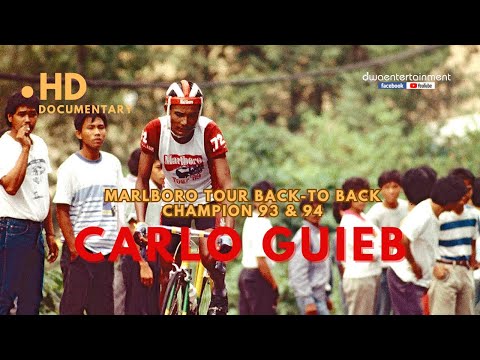
Before the era of modern carbon-fiber bikes and GPS-tracked training, Philippine cycling was forged in the fires of the Marlboro Tour—a brutal, grueling 3,000-kilometer odyssey that stretched across the rugged spine of the archipelago. It was a race that broke the spirits of ordinary men. But for Nueva Vizcaya’s Carlo Guieb, it was the stage where he became royalty.
To the fans who lined the highways in the 1990s, Guieb wasn’t just a cyclist; he was the undisputed King of the Mountains.
While other riders dreaded the steep, oxygen-deprived ascents of northern Luzon, Guieb thrived where the air got thin. He was a certified monster in the mountains. His playground was the infamous Baguio portion of the race—a punishing, vertical labyrinth of switchbacks where the faint of heart faded away.
It was on these killer slopes that Guieb would inevitably strike. While the peloton gasped for breath, he would launch devastating, explosive breakaways, leaving the pack stranded in his wake.
Guieb’s ascent to the top wasn’t without epic resistance. The early ’90s gave birth to some of the most legendary battles in Philippine sports history, none more fierce than Guieb’s wheel-to-wheel wars with Bicol’s own cycling icon, Renato Dolosa. After a heartbreakingly close second-place finish in the 1991 Tour, Guieb refused to be denied again.
He channeled that hunger into an era of absolute dominance, capturing spectacular back-to-back championships in 1993 and 1994.
What made the “Ruler of the Uplands” a true fan favorite, however, was the stark contrast between his ferocious riding style and his demeanor off the saddle. For all his savage power on the road, Guieb remained profoundly unassuming and humble—a soft-spoken warrior who let his legs do the talking.
Decades after his historic back-to-back peak, the fire still burns. Guieb remains deeply involved in the local cycling community today, mentoring the next generation of riders and ensuring that the grit, heart, and spirit of the Tour’s golden age live on.