
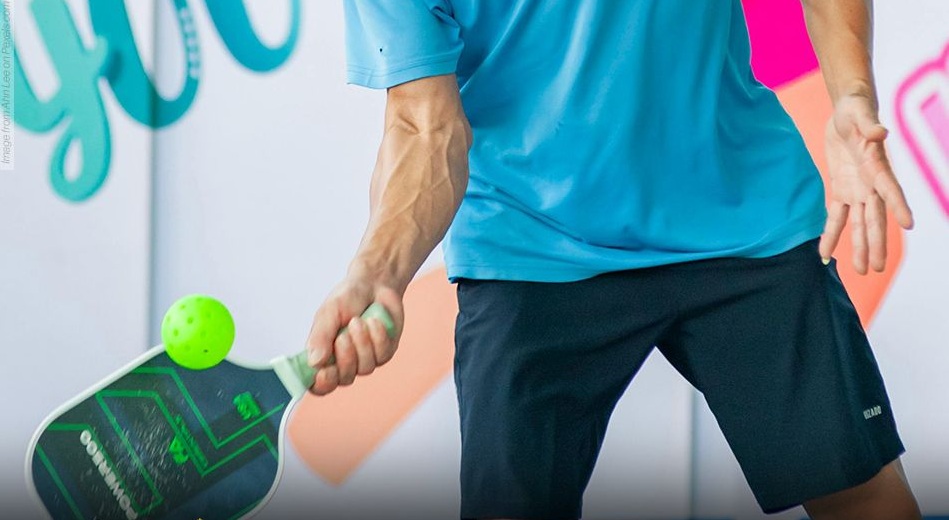
As pickleball races toward possible inclusion in the Brisbane 2032 Olympics, stakeholders are finding that the sport’s biggest challenges may lie not only on the court, but in the legal frameworks that define ownership, legitimacy, and innovation.
Once a backyard pastime in 1965, pickleball has evolved into one of the fastest-growing sports globally, with its expansion now reaching the Philippines, where around 400 clubs have sprung up in recent years.
But rapid growth has also exposed gaps in governance — areas where intellectual property (IP) rights are increasingly being used to impose order.
Trademarks and legitimacy
At the center of the issue is fragmentation among governing bodies, a problem that could hinder recognition by the International Olympic Committee (IOC), which requires a unified international federation.
IP tools such as trademarks are emerging as a way to define legitimacy. Official federation names, tournament brands, and league identities can be registered and protected, helping distinguish sanctioned events from unauthorized ones.
In the Philippines, this tension is already visible. The Philippine Pickleball Federation has moved against tournaments branding themselves as “national” without official sanction, issuing cease-and-desist orders and requiring organizers to rebrand or secure accreditation.
Without enforcement, stakeholders warn that inconsistent branding could fragment the sport’s identity and undermine efforts to standardize rules — both essential for Olympic inclusion.
Patents, design, and competitive fairness
Beyond governance, IP rights are shaping the sport’s technological evolution. Manufacturers are investing in paddle materials, ball design, and surface technologies, protecting these innovations through patents, utility models, and industrial design rights.
These protections allow companies to recover research and development costs while maintaining a competitive edge.
But the same growth has also attracted counterfeit products, raising concerns about both safety and fairness.
“Counterfeit paddles undermine competitive integrity and can pose real safety risks,” stakeholders noted, pointing to the lack of regulation in imitation equipment.
For a sport seeking Olympic status, standardized and certified equipment is critical — making IP enforcement a necessary complement to rule-making.
Copyright and the business of the game
As pickleball’s audience expands, copyright and related rights are also becoming central to its commercial viability.
Broadcast and streaming rights determine who can capture and distribute matches, turning content into a revenue stream for leagues, organizers, and athletes.
In the Philippines, early growth driven by livestreams and social media is now shifting toward formal media partnerships, reflecting a more structured IP environment.
This mirrors broader trends in sports, where media rights have become a major source of income and control over content distribution.
Licensing and commercialization
Licensing is another key layer, allowing federations to authorize the use of official marks on merchandise and equipment. This not only protects brand identity but also opens revenue channels as the sport scales.
Retailers and sponsors entering the Philippine market signal growing commercial interest, but also underscore the need for clear IP rules to manage branding, partnerships, and product authenticity.
IP as the framework for Olympic ambitions
For pickleball, the road to the Olympics is no longer just about global popularity or athletic performance. It is increasingly about building a coherent system of rights that governs how the sport is played, marketed, and monetized.
“On the court, the game works because the lines are clear. Off the court, intellectual property does the same thing by telling people what’s official, what’s innovative and what’s worth investing in,” said Global Pickleball Federation treasurer Mike Johnson.
“Our Olympic ambitions will take more than skill… what we need to build are strong systems to keep not just the ball in play, but the rules, rights and reputation of the sport… intact,” he added.
As pickleball eyes the Olympic stage, IP rights are emerging not just as legal safeguards — but as the structural backbone that could determine whether the sport makes the cut.