
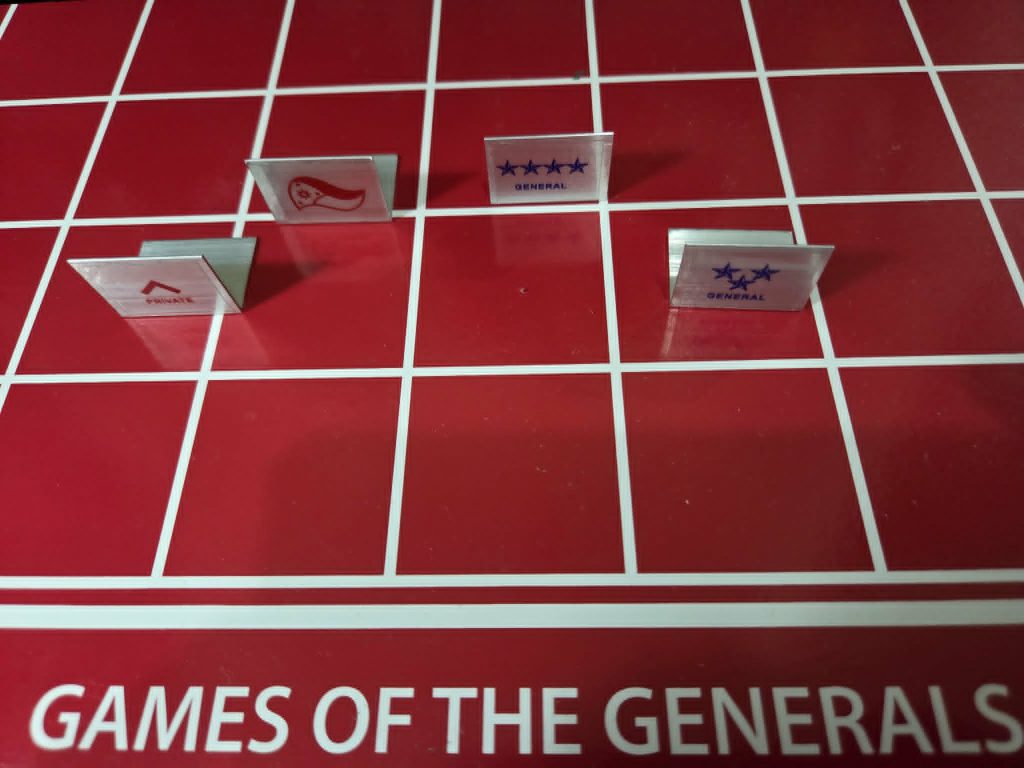
In an era where speed, spectacle, and digital dominance define modern competition, one Filipino creation quietly remains as a true test of intellect and logic.
In 1970, Sofronio H. Pasola Jr. introduced GG, better known as Game of the Generals or Salpakan — a local strategic masterpiece that deserves a place alongside the world’s most respected mind games.
At first glance, the game appears very simple: two players command opposing armies on a compact board. But beneath its minimalist design lies a battlefield of violence and calculation.
Every move demand seeing what lies ahead. Every encounter carries effects. Like chess, it rewards patience and planning — but unlike chess, it depends on uncertainty.
Game of the Generals is not merely about positioning pieces; it is about reading an opponent. It sharpens the memory, develops analytical thinking, and increases spatial awareness.
Players must think of strategies while simultaneously interpreting their rival’s intentions. The game mirrors real-world military combat, moving ranks from generals down to privates, with spies behaving as the ultimate wild cards — capable of toppling nearly any piece, except for the lowly private.
This delicate balance between power and weakness creates a situation where no advantage is ever truly secure.
Victory comes in two ways: a great offensive by protecting the flag safely to the enemy’s end, or a planned strike by capturing the opponent’s flag.
Yet the game’s attraction lies in its hidden information system. Each piece’s identity is concealed, turning every clash into a gamble of winning and losing.
The result is a psychological warfare where confidence can be a weapon — and hesitation, a destructive flaw.
Unlike many traditional board games, Game of the Generals typically requires an arbiter to validate encounters, reinforcing its structured, almost officiated nature, much like a sport functioning under strict rules and unbiased judgment.
Matches are fast, often finishing within 20 minutes, but within that short period reveals a complete narrative of strategy, risk, and mental strength.
And yet, despite its innovation and competitive depth, the game remains largely underappreciated — even in its country of origin. In a sporting landscape where, physical capabilities often take center stage, Game of the Generals stands as a reminder that competition of the highest order can also take place in the mind.
Perhaps it is time for a revival.
For in this forgotten Filipino ingenuity lies not just a game, but a sport of intellect — one that celebrates planning over chance, and strategy over spectacle.